What is machine vision? What are its applications? What are its future development trends?
Computer vision aims to use computers to simulate human visual mechanisms, enabling the perception and understanding of the external environment. Specifically, it uses cameras and computing devices to replace the human eye in detecting, recognizing, tracking, and measuring targets, and further processes and transforms image signals to make them more suitable for human observation or machine analysis. This field is dedicated to researching related theories and technologies to build intelligent systems capable of extracting valuable information from images or multidimensional data.
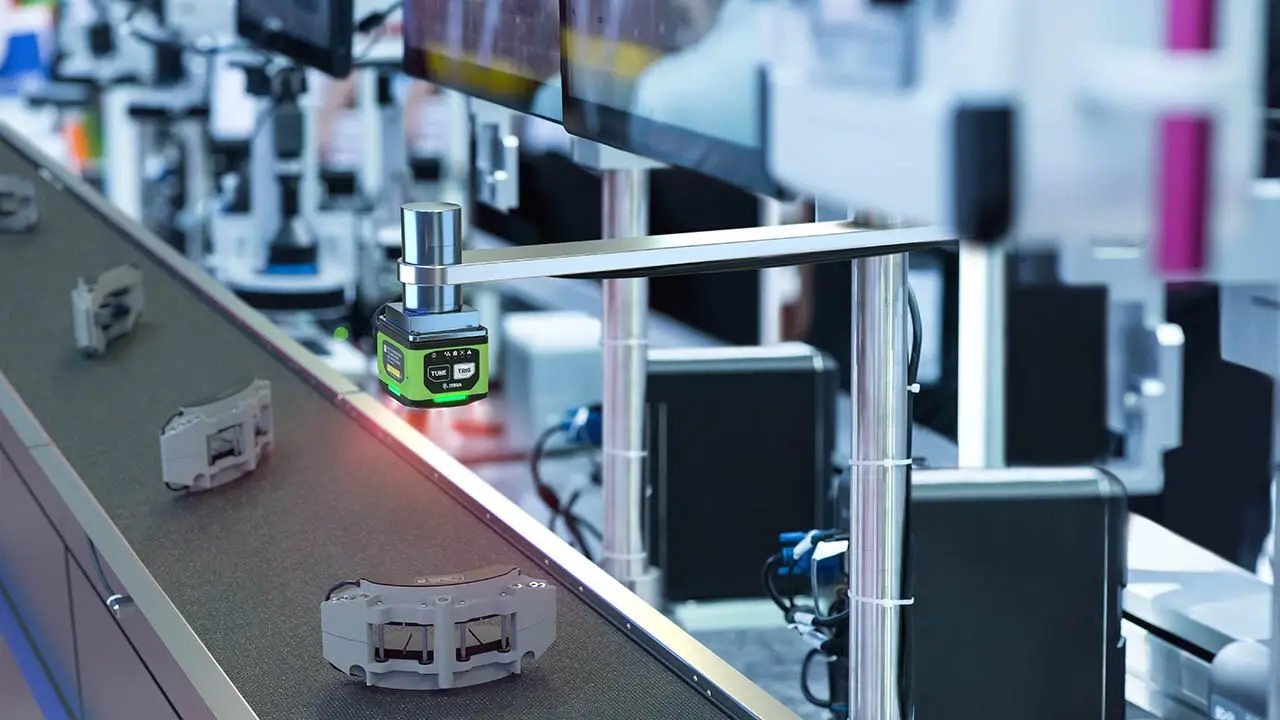
Machine vision is an automated system based on computer vision technology, designed to enable computers to simulate human vision and perception, and to analyze, process, and understand image and video data. It combines image processing, pattern recognition, machine learning, and artificial intelligence technologies to identify, detect, measure, and analyze visual information.
Machine vision has wide applications in various fields. Here are some common application scenarios:
(1) Quality inspection and control: Machine vision can be used to detect product appearance defects, dimensional deviations, assembly errors, etc. It can quickly and accurately identify and classify defects, improving quality control on the production line.
Among domestic machine vision companies, Huicui Vision's embedded intelligent software (HCvisionQuick) algorithm library (HCvisionLib) possesses functions such as visual positioning, geometric dimension measurement, product defect detection, and OCR recognition. It is currently widely used in industries such as electronics manufacturing, automotive manufacturing, robotics, packaging, logistics, hardware, intelligent transportation, food, textiles and footwear, biotechnology, and pharmaceuticals. Users can rapidly improve the automation and intelligence of their production lines, greatly enhancing production and inspection efficiency.
(2) Automated navigation and guidance: Machine vision can be used in navigation and guidance systems, such as autonomous vehicles, drones, and robots. It can perceive the environment, detect obstacles, and make corresponding decisions by analyzing image data.
(3) Object recognition and classification: Machine vision can recognize and classify objects, such as face recognition, object recognition, and license plate recognition. This has wide applications in security systems, human-computer interaction, and intelligent monitoring.
(4) Medical image analysis: Machine vision can be used for medical image analysis, such as medical image diagnosis, lesion detection, and surgical assistance. It can help doctors quickly and accurately analyze image data and provide information to assist in decision-making.
(5) Logistics and Warehouse Management: Machine vision can be used in logistics and warehouse management, such as object recognition and sorting, cargo tracking and management. It can improve the efficiency and accuracy of logistics operations.
In the future, machine vision technology will have the following development trends:
(1) Deep Learning and Artificial Intelligence: With the development of deep learning and artificial intelligence, machine vision will become more intelligent and adaptive. Using deep learning algorithms, machines can automatically learn and extract features from images, thereby improving the accuracy and robustness of visual tasks.
(2) Multimodal fusion: By fusing machine vision with data from other sensors, such as sound and lidar, more comprehensive and accurate environmental perception and understanding can be provided.
(3) Real-time performance and low latency: With the improvement of computing power and the optimization of algorithms, machine vision systems will achieve faster processing speed and lower latency to meet the needs of real-time applications.
(4) Mobile and Embedded Applications: With the popularization of mobile devices and embedded systems, machine vision will be more widely used in smartphones, smart homes, drones and other devices to provide users with a smarter and more convenient experience.
(5) Cross-industry applications: Machine vision will penetrate more industries and fields, such as agriculture, retail, and healthcare. It will help improve production efficiency, enhance user experience, and solve practical problems.