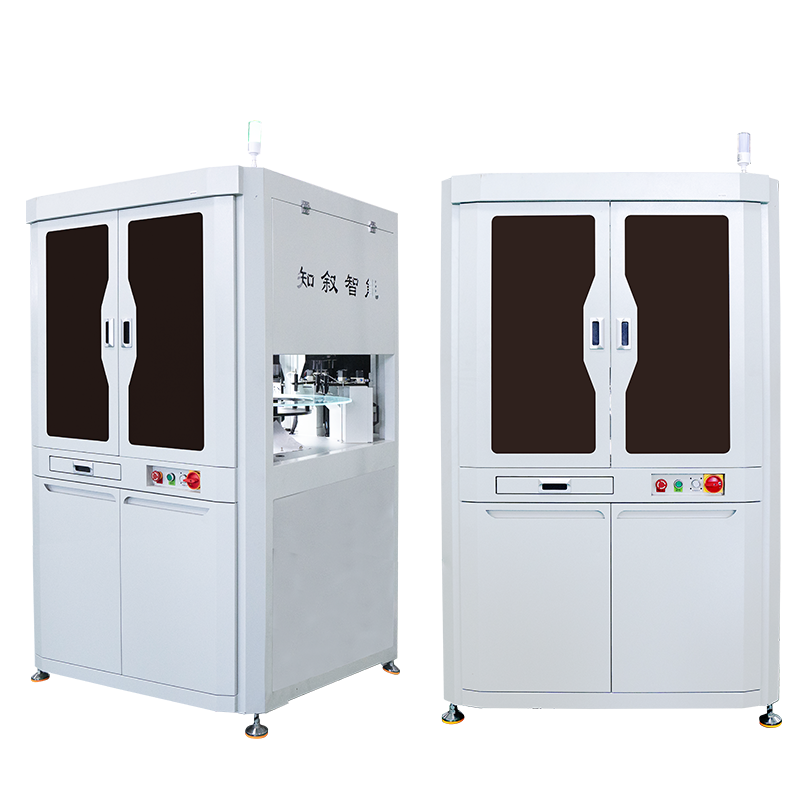


1. Technical Principles and Core Components
CCD inspection, based on the photoelectric effect of charge-coupled devices (CCDs), converts light signals into electrical signals and outputs digital images. Its core is capturing weak light signals using a highly sensitive CCD chip, making it suitable for high-precision applications such as astronomical observation and spectral analysis. AOI (Automated Optical Inspection), on the other hand, relies on optical imaging systems and algorithms, using a combination of multi-angle cameras and light sources to detect defects. Both require image processing technology, but CCD emphasizes hardware sensor performance, while AOI places greater emphasis on algorithms and system integration.
2. Differences in application areas
CCD inspection: Primarily used for precision measurements in scientific research and industry, such as astronomical observation (pulsar navigation), medical imaging (CT/MRI-assisted), and semiconductor wafer inspection. Its high quantum efficiency (up to 95%) and low noise characteristics make it the preferred choice for detecting weak light signals.
AOI (Automated Optical Inspection) focuses on online inspection in manufacturing, such as PCBA assembly quality control, electronic product solder joint inspection, and textile defect screening. AOI achieves micron-level accuracy through magnification (≥35x) and multi-angle imaging, making it suitable for real-time monitoring on production lines.
3. Performance Indicator Comparison
Indicators: CCD detection, AOI detection
quantum efficiency High (visible light band >50%, back-illuminated >95%) Medium (depends on optical system design)
Dynamic range Width (up to 8-10 star magnitudes) Narrower (due to limitations of industrial light sources and lenses)
noise level Extremely low (readout noise < 10e⁻) High (affected by ambient light interference)
Detection speed Slow (charges need to be read line by line) Fast (parallel processing of multi-region images)
4. System complexity and cost
CCD detection requires a complex cooling system (such as liquid nitrogen) to reduce dark current, has low system integration, and is costly.
AOI inspection: Modular design (such as multi-camera splicing) can be directly embedded into the production line, and the cost is relatively controllable, but it depends on algorithm optimization.
5. Development Trends and Complementarity
CCD: Continuously optimized in high-precision fields such as astronomy and medicine, but faces challenges from CMOS technology (CMOS has lower power consumption and higher integration).
AOI: Improve detection coverage through AI algorithms (such as deep learning defect classification) and gradually expand to fields such as automotive parts and new energy batteries.
Collaborative Applications: In high-end manufacturing, CCDs can serve as high-precision auxiliary sensors for AOI systems, compensating for their shortcomings in low light or complex backgrounds.
Summarize
CCD inspection and AOI inspection differ significantly in their technological approaches, application scenarios, and performance focuses. CCD excels in high sensitivity and wide dynamic range, making it suitable for scientific research and precision measurement; AOI, on the other hand, focuses on rapid, low-cost online inspection, serving quality control in manufacturing. The two technologies both compete and complement each other in their evolution, jointly driving progress in industrial automation and scientific research.